
ENP Nickel Plating

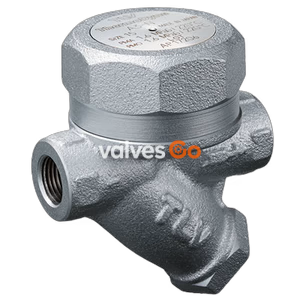
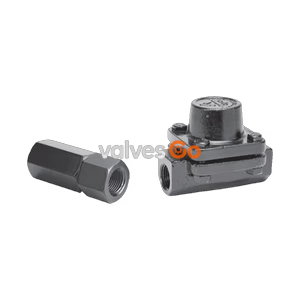
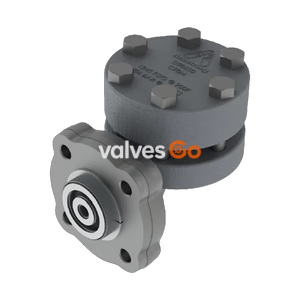
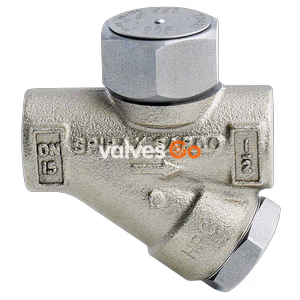
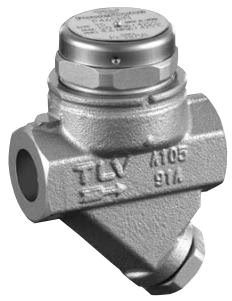
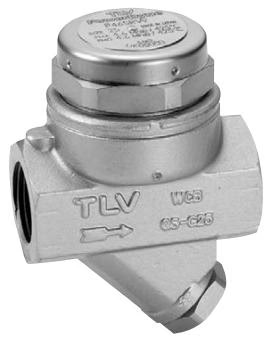
TLV P46SRN, P46SRM, P46SRW, P65SRN inline repairable thermodynamic steam traps with thermostatic air vent for medium capacity applications up to 4.6 or 6.5 MPaG.
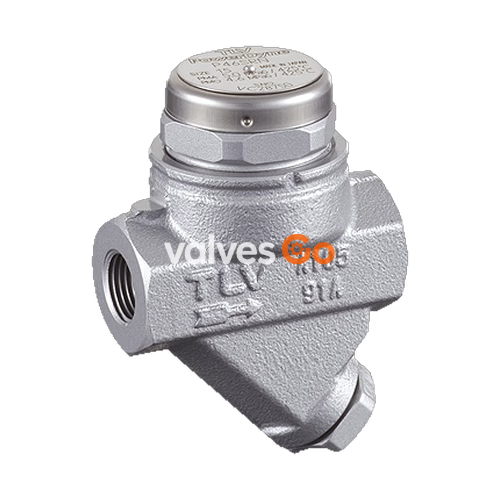
TLV P46SRN inline repairable thermodynamic steam traps with thermostatic air vent (P Series, including P46SRM, P46SRW, and P65SRN) can be used without adjustment for medium capacity applications between 0.03 and 4.6 or 6.5 MPaG (5 and 650 or 925 psig). Typical applications include steam mains, tracers, and coils. The traps discharge condensate at a temperature slightly lower than saturation temperature.
WARNING
Install properly and DO NOT use this product outside the recommended operating pressure, temperature and other specification ranges. Improper use may result in such hazards as damage to the product or malfunctions, which may lead to serious accidents. DO NOT subject the trap to condensate loads that exceed its discharge capacity.
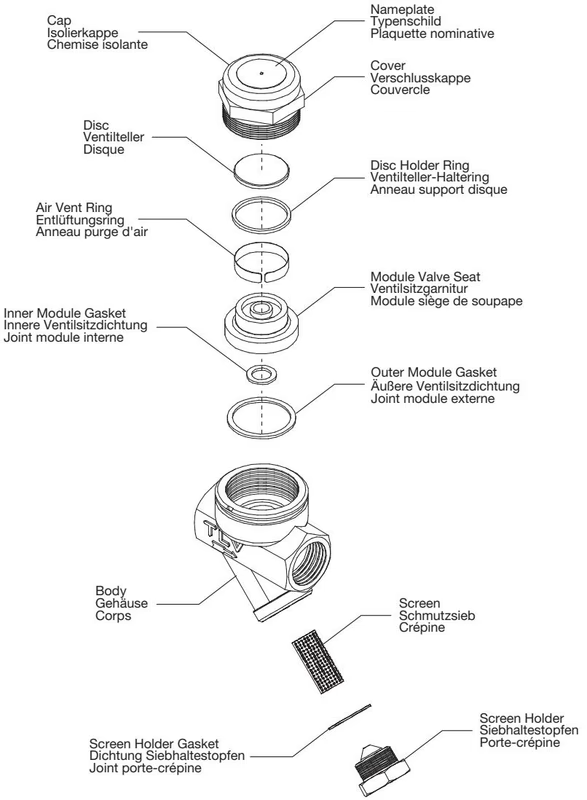
| No. | Description | M* | R* | No. | Description | M* | R* |
|---|---|---|---|---|---|---|---|
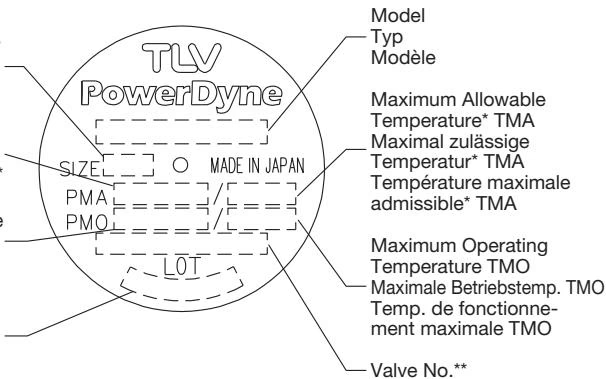
| 1 | Body | 8 | Nameplate | √ | |||
| 2 | Module Valve Seat | √ | 9 | Inner Module Gasket | √ | √ | |
| 3 | Cover | √ | 10 | Screen | √ | ||
| 4 | Disc | √ | 11 | Screen Holder Gasket | √ | √ | |
| 5 | Disc Holder Ring | √ | 12 | Screen Holder | |||
| 6 | Air Vent Ring (Bimetal) | √ | 13 | Cap | √ | ||
| 7 | Outer Module Gasket | √ | √ |
*M = Maintenance Kit; R = Repair Kit; replacement parts are available only in their respective kits.
Refer to the product nameplate for detailed specifications. Minimum Operating Pressure: 0.03 MPaG (5 psig). Maximum Allowable Back Pressure: 80% of inlet pressure.
Check to make sure that the pipes connected to the trap have been installed properly.
| Requirement | Correct | Incorrect |
|---|---|---|
| Install a catchpot of the proper diameter. |  Diameter is too small. Diameter is too small. | |
| Make sure the flow of condensate is not obstructed. |  | Diameter is too small  and inlet protrudes into pipe. and inlet protrudes into pipe. |
| To prevent rust and scale from flowing into the trap, connect the inlet pipe 25 – 50 mm (1 - 2 in) above the base of the T-pipe. | Rust and scale flow  into the trap with the condensate. into the trap with the condensate. | |
| When installing on the blind end, make sure nothing obstructs the flow of condensate. |  | Condensate collects 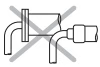 in the pipe. in the pipe. |
A visual inspection can be carried out to aid in determining the necessity for immediate maintenance or repair.
| Condition | Description |
|---|---|
| Normal | Condensate is discharged in a short blast followed by a longer period of no drainage. During the discharge, flash steam may be seen. |
| Blocked (Discharge impossible) | No condensate is discharged. The trap is quiet and makes no noise. The surface temperature of the trap is low. |
| Blowing | Live steam continually flows from the outlet, and there is a continuous metallic sound. |
| Steam Leakage | Live steam is discharged through the trap outlet together with condensate, accompanied by a high-pitched sound. |
| Chattering | The trap does not close properly. Steam is discharged from the trap in short rapid bursts. |
If the expected performance is unachievable after installation of the trap, check the following points.
| Problem | Cause | Remedy |
|---|---|---|
| No condensate is discharged (blocked) or discharge is poor | Screen is clogged with rust or scale | Clean |
| Air vent ring (bimetal) is broken or worn, causing air-binding | Replace air vent ring | |
| Disc holder ring is broken or worn, causing air-binding | Replace disc holder ring | |
| Disc is sticking to valve seat (due to oil, etc.) | Clean | |
| Steam-locking has occurred | Perform a bypass blow-down, or close the trap inlet valve and allow the trap to cool. Piping correction may also be required. | |
| Trap capacity is insufficient | Change to trap of suitable capacity | |
| Differential pressure is low | Study inlet/outlet pressure, including rise in outlet pipe |
Explore similar products in our catalog