
PN25

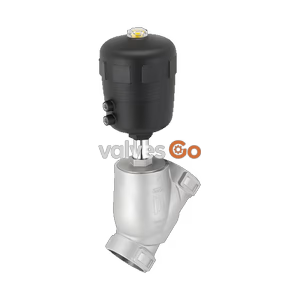
Burkert Type 2100 (SKU 20022618) pneumatically operated 2/2-way angle seat valve. Features a stainless steel body, PTFE seal, weld end, and ELEMENT automation integration. Suitable for steam, gases, and liquids up to 16 bar.
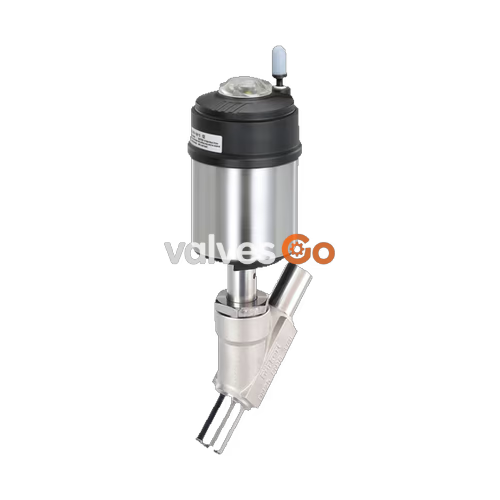
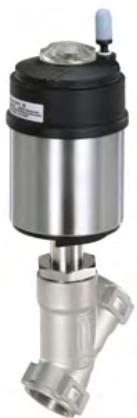
Burkert 20022618 Type 2100 is a pneumatically operated 2/2-way angle seat valve specially optimised for decentralized process automation. It fulfils the tough criteria in process environments. Its unique design allows easy integration of automation units in all expansion stages, from electrical/optical position feedback to pneumatic control and integrated fieldbus interface. Maximum service life and tightness are achieved by the proven self-adjusting V-seal packing gland. The highly integrated system of valve and automation unit is characterised by its compact and smooth design, integrated pilot air ducts, protection classes IP65/67, NEMA Type 4X, and high resistance to chemicals.
WARNING
Risk of damage due to bursting pipes and bursting equipment when the flow is above the seat. In the case of liquid mediums, water hammer can occur causing pipes and the device to burst. Do not use valves with flow above the seat for liquid mediums.
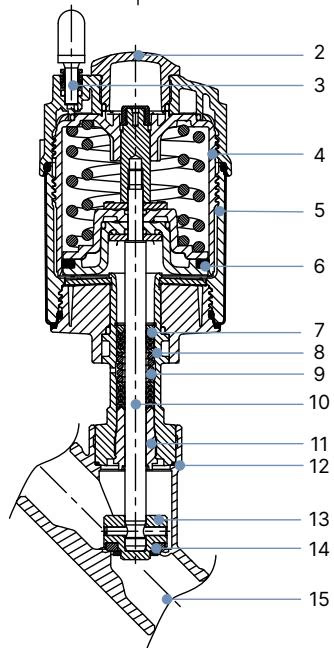
| No. | Element | Material |
|---|---|---|
| 4 | Actuator cover | PPS |
| 5 | Actuator casing | Stainless steel 1.4561 (316Ti) |
| 6 | Piston seal | FKM |
| 9 | Packing gland | PTFE V-Rings (filled), with spring compensation |
| 11 | Spindle guide | PEEK |
| 13 | Swivel plate | Stainless steel 1.4401 (316)/1.4404 (316L) |
| 14 | Seat seal | PTFE, PEEK (Option) |
| 15 | Valve body | Stainless steel CF3M |
Flow direction below the seat Only use flow direction below the seat for liquid media, gases, and vapours. As the medium is present under the swivel plate, the operating pressure contributes to the opening of the valve. 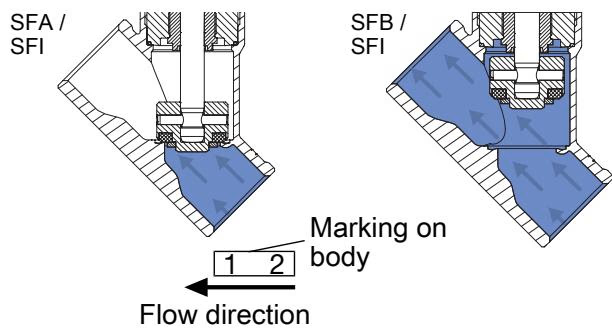
Flow direction above the seat Only use flow direction above the seat for gases and vapours, and valves with control function A. As the medium is present above the swivel plate, the operating pressure contributes to the closing of the valve. 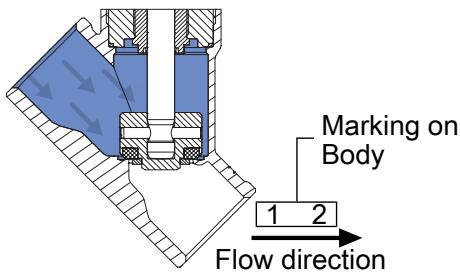
TIP
The position of the pilot air ports can be seamlessly changed by turning the actuator 360°. To prevent damage, the valve must be in the open position when the actuator is turned.
DANGER
Danger due to lubricant Lubricant may contaminate the medium. There is a risk of explosion in oxygen applications. Only use lubricant that is permitted for the medium.
DANGER
Explosion Hazard due to Electrostatic Charge! If the device is used in a potentially explosive atmosphere, ensure proper grounding of the actuator and valve body to prevent electrostatic discharge.
Explore similar products in our catalog