
PN16

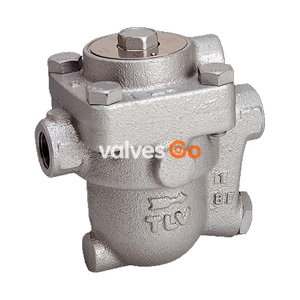
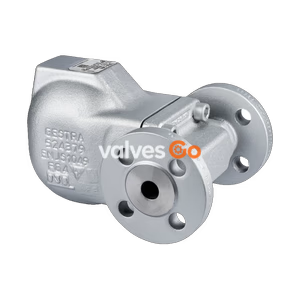
TLV JH3S-X inline repairable stainless steel free float steam trap with thermostatic air venting. Up to 32 barg operating pressure for process equipment.
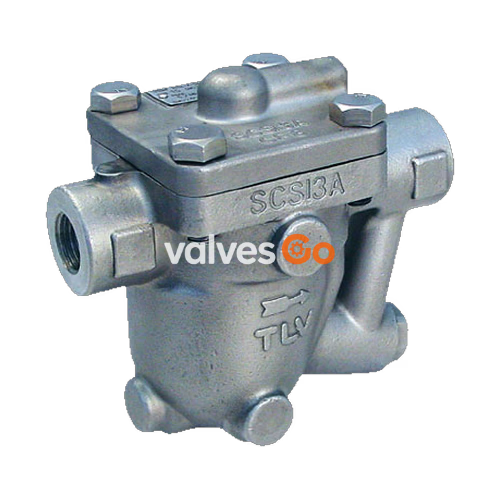
The TLV JH3S-X is a reliable and durable stainless steel inline repairable free float steam trap with thermostatic air venting (X-element). It is suitable for a wide range of applications with small-to-large capacities and pressures up to 32 barg (3.2 MPaG), such as all kinds of heat exchangers, process heaters, and coils. The trap discharges condensate continuously and automatically at a temperature slightly lower than saturation temperature, utilizing a self-modulating free float that provides smooth, low-velocity discharge as process loads vary.
A precision-ground float, constant water seal, and three-point seating design ensure a steam-tight seal even under no-load conditions. The thermostatic capsule (X-element) features a "fail open" design that vents air automatically at close-to-steam temperature, ensuring rapid startup and extended trouble-free operation. Easy inline access to internal parts simplifies cleaning and reduces maintenance costs.
WARNING
NEVER apply direct heat to the float. The float may explode due to increased internal pressure, causing accidents leading to serious injury or damage to property and equipment.
WARNING
When disassembling or removing the product, wait until the internal pressure equals atmospheric pressure and the surface of the product has cooled to room temperature. Disassembling or removing the product when it is hot or under pressure may lead to discharge of fluids, causing burns, other injuries or damage.
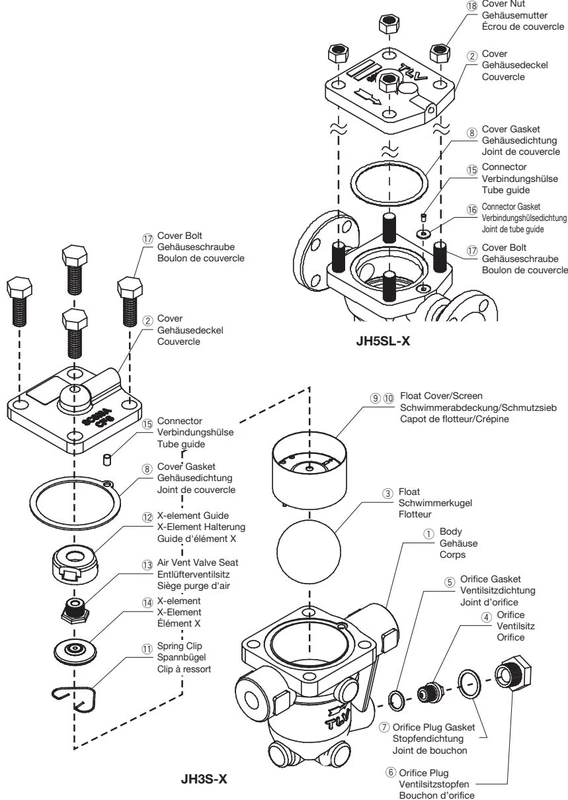
| No. | Description | Maintenance (M) | Repair (R) | Float (F) |
|---|---|---|---|---|
| 1 | Body | |||
| 2 | Cover | |||
| 3 | Float | √ | ||
| 4 | Orifice | √ | ||
| 5 | Orifice Gasket | √ | √ | |
| 6 | Orifice Plug | |||
| 7 | Orifice Plug Gasket | √ | √ | |
| 8 | Cover Gasket | √ | √ | |
| 9 | Float Cover | √ | ||
| 10 | Screen | √ |
| Model | Connection | Size | Orifice No. | Max Operating Pressure (PMO) | Max Operating Temp (TMO) | Air Vent Type |
|---|---|---|---|---|---|---|
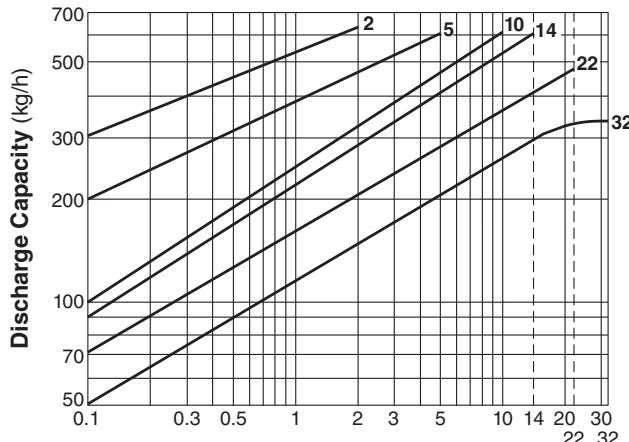
| JH3S-X | Screwed, Socket Welded, Flanged | 1/2", 3/4", 1" (DN 15, 20, 25) | 2, 5, 10, 14, 22, 32 | Up to 32 barg | 240 °C | X-element (type C6) |
| JH3S-B | Screwed, Socket Welded, Flanged | 1/2", 3/4", 1" (DN 15, 20, 25) | 2, 5, 10, 14, 22, 32 | Up to 32 barg | 350 °C | Bimetal |
Note: Maximum Allowable Pressure (PMA) is 32 barg. Maximum Allowable Temperature (TMA) is 350 °C. These are pressure shell design conditions, not operating conditions.
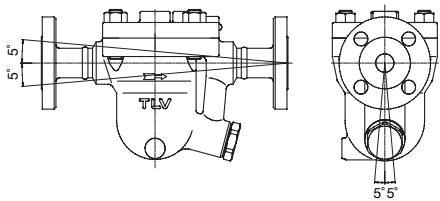
Operational inspections should be performed at least twice per year, or as called for by trap operating conditions.
Tightening Torque (JH3S-X):
| Part | N·m | Distance Across Flats (mm) |
|---|---|---|
| Cover Bolt / Nut | 50 | 17 |
| Orifice | 30 | 10 |
| Orifice Plug | 80 | 24 |
| Air Vent Valve Seat | 35 | 19 |
| Drain Plug (Option) | 35 | 21 |