
PN25

Yoshitake GP-1210S pilot-operated, pneumatic remote type pressure reducing valve for steam. Features stainless steel trim, JIS Rc screw connection, and 20:1 maximum reduction ratio.
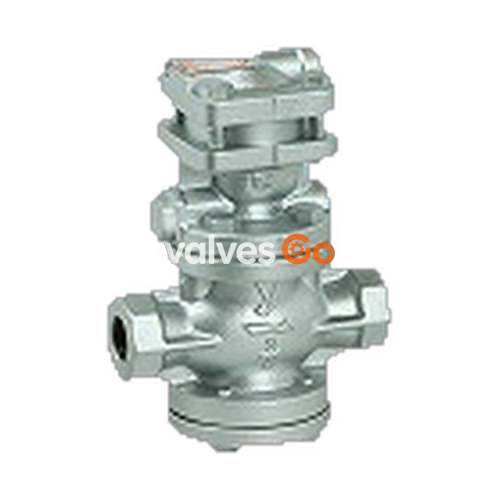
Yoshitake GP-1210S is a pilot-operated, pneumatic remote type pressure reducing valve for steam. It features a simple and robust internal structure and is well-suited for systems where the pressure setting is frequently changed, or for centralized control systems. The "S" designation indicates that the trim parts (piston and cylinder) are made of stainless steel for enhanced durability.
| Model | GP-1210S (GP-1210) |
|---|---|
| Application | Steam |
| Inlet Pressure | 0.1 - 1.0 MPa |
| Reduced Pressure | 0.05 - 0.9 MPa (90% or less of inlet pressure) |
| Minimum Differential Pressure | 0.05 MPa |
| Maximum Pressure Reduction Ratio | 20:1 |
| Maximum Temperature | 220°C |
| Valve Seat Leakage | 0.01% or less of rated flow |
| Connection | JIS Rc Screw |
| Body Material | Ductile cast iron |
| Valve & Valve Seat Material | Stainless steel |
| Piston & Cylinder Material | Stainless steel (for S type) |
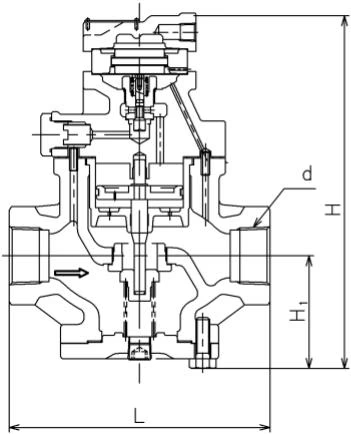
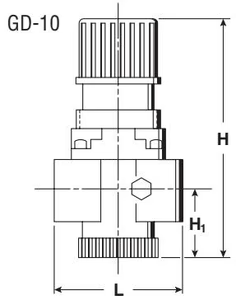
| Size | d | L | H | H1 | Weight (kg) |
|---|---|---|---|---|---|
| 15A | Rc 1/2 | 150 | 220 | 64 | 7.0 |
| 20A | Rc 3/4 | 155 | 220 | 64 | 7.0 |
| 25A | Rc 1 | 160 | 235 | 67 | 8.5 |
| 32A | Rc 1-1/4 | 190 | 258 | 82 | 12.0 |
| 40A | Rc 1-1/2 | 190 | 258 | 82 | 12.5 |
| 50A | Rc 2 | 220 | 282 | 93 | 18.0 |
Rc1/4 Air loading pressure port.
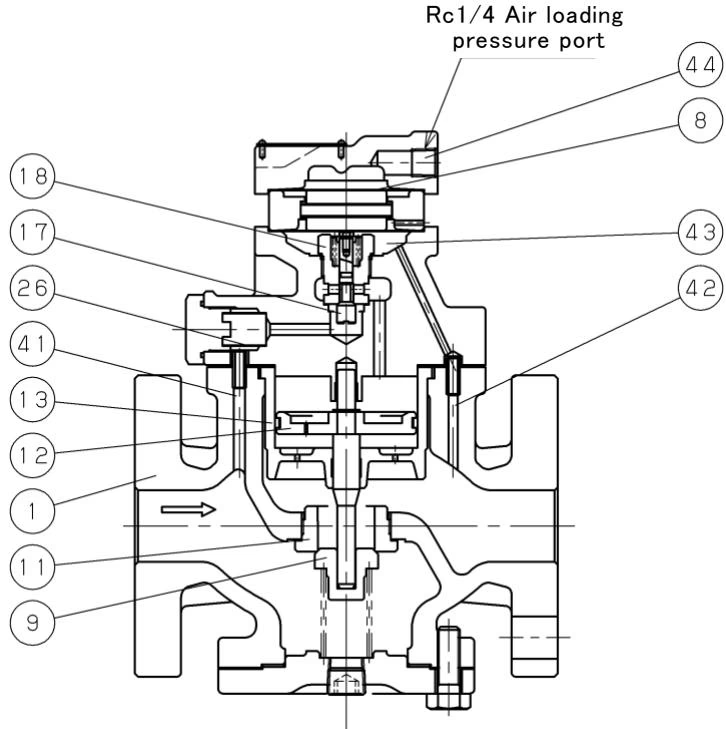
The pressure reducing valve reduces pressure by throttling the valve. The valve is composed of the main valve and main valve seat for throttling, and air pressure control space, diaphragm, pilot valve, and piston for pressure sensing and activation.
WARNING
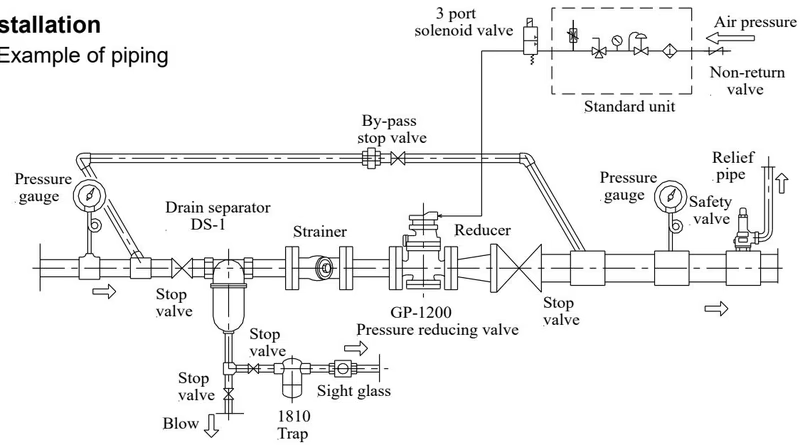
Because of heavy weight, hold the valve with lifting equipment while piping. In case installing a safety valve as a safety device at the outlet side, joint relief pipe at the outlet of the safety valve and guide it to a safety place where steam can relief out.
TIP
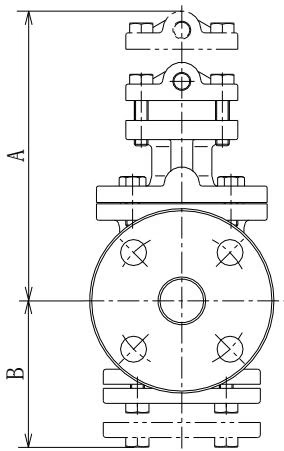
Provide space on the top and bottom of the valve so that the valve can be easily disassembled and inspected.
Yoshitake Control Valves / Pressure Reducing Valves
GP, GD, and CP series for stable pressure reduction and control in steam, water, and air systems.
Explore similar products in our catalog