
PN25

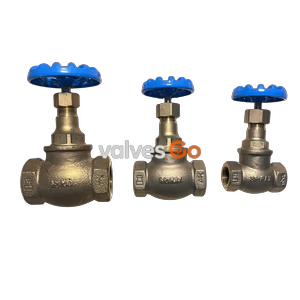
Yoshitake GLV-10 ductile cast iron globe valve for steam, air, water, and oil. Features JIS Rc threaded connection, max pressure 1.4 MPa, and 220°C max temperature.
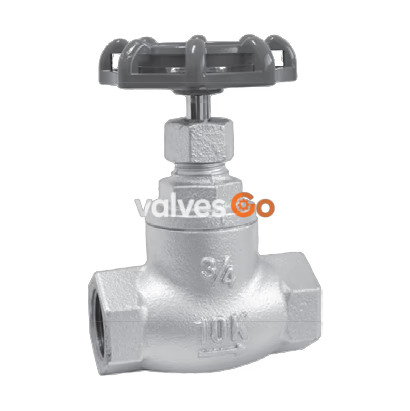
Yoshitake GLV-10 is a ductile cast iron globe valve designed for steam, air, cold and hot water, oil, and other non-dangerous fluids. It features a JIS Rc threaded connection, a maximum operating pressure of 1.4 MPa, and handles temperatures up to 220°C. The valve body and bonnet are constructed from FCD450 ductile cast iron, ensuring durability in industrial isolation applications.
| Application | Steam, Air, Cold and hot water, Oil, Other non-dangerous fluids |
|---|---|
| Maximum Pressure | 1.4 MPa *1 |
| Maximum Temperature | 220°C *1 |
| Body / Bonnet Material | Ductile cast iron (FCD450) |
| Disc / Spindle Material | Stainless steel (SUS410 equivalent) |
| Connection | JIS Rc screwed |
*1 The relation between pressure and temperature depends on JIS B 2051 pressure-temperature standard. Valve is closed at the time of shipment from the factory.
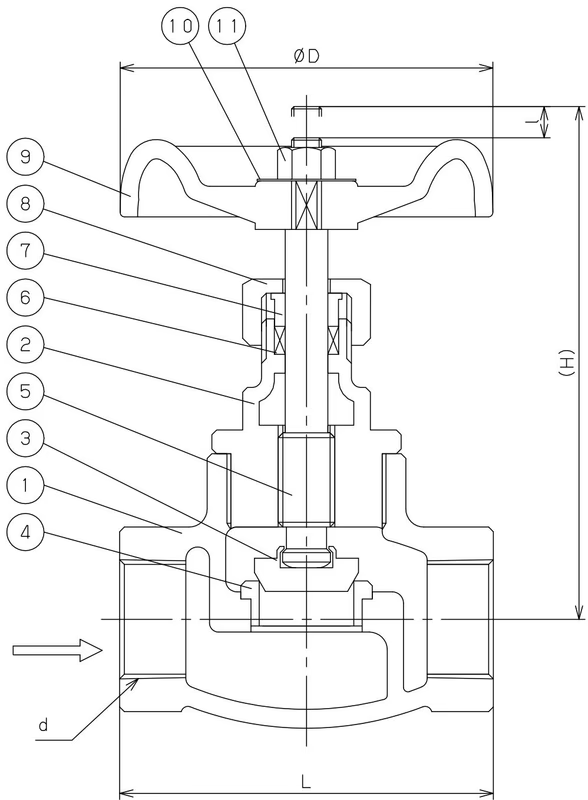
| Nominal Size | d | D (mm) | L (mm) | H (mm) | l (mm) | Weight (kg) |
|---|---|---|---|---|---|---|
| 8A | Rc 1/4 | 63 | 65 | 100 | 6 | 0.5 |
| 10A | Rc 3/8 | 63 | 65 | 100 | 6 | 0.5 |
| 15A | Rc 1/2 | 63 | 65 | 100 | 6 | 0.5 |
| 20A | Rc 3/4 | 70 | 80 | 110 | 7 | 0.7 |
| 25A | Rc 1 | 80 | 90 | 126 | 8 | 1.0 |
| 32A | Rc 1 1/4 | 100 | 105 | 148 | 10 | 1.7 |
| 40A | Rc 1 1/2 | 100 | 120 | 161 | 11 | 2.3 |
| 50A | Rc 2 | 125 | 140 | 179 | 13 | 3.5 |
Installation and Storage Cautions
Operating Warnings
Conduct periodic inspection about once a year to check for opening/closing operation, abnormal sound, and outside leakage.
| Trouble | Cause | Remedy |
|---|---|---|
| Outside leakage | 1. The gland nut is loosened. 2. The gland packing is damaged. 3. The spindle is damaged. | 1. Tighten the gland nut. 2. Replace the product with a new one. 3. Replace the product with a new one. |
| Leakage from the valve and/or valve seat on complete closing | 1. The valve and/or valve seat is damaged. 2. Foreign substance is stuck. | 1. Replace the product with a new one. 2. Remove the foreign substance. |
| Operation torque of the handle is abnormally large | 1. Too much tightening of the gland nut. 2. Foreign substance is stuck on spindle and screw part. | 1. Loosen the gland nut and tighten it again to the no leakage degree. 2. Remove the foreign substance. |
| Abnormal sound | 1. Each screw part is loosened. | 1. Retighten the loosened parts. |
Yoshitake Isolation Valves / Globe Valves
GLV, BSV, FV, and HV series globe valves for threaded and flanged isolation duties.
Explore similar products in our catalog