
PN25

Yoshitake GP-1210TS pilot-operated air-loaded pressure reducing valve for air. Features ductile cast iron body, JIS Rc screwed connection, and stainless steel trim.
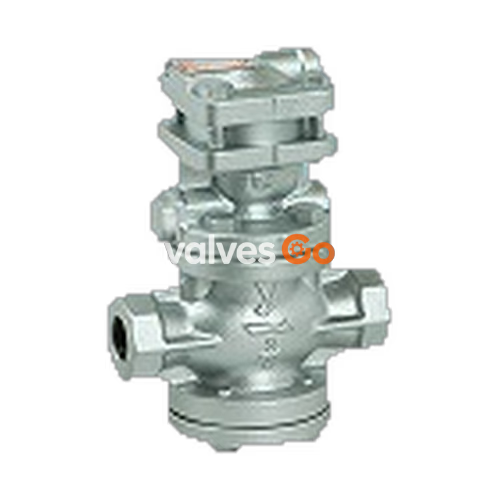
Yoshitake GP-1210TS is a pilot-operated, air-loaded pressure reducing valve designed for air and non-corrosive gases. It is a variant of the GP-1210T equipped with stainless steel main components (piston, cylinder, and valve) for improved durability and corrosion resistance. It provides stable pressure control for a variety of applications, ranging from building utility systems to factory air-conditioning and manufacturing systems.
| Specification | Value |
|---|---|
| Application | Air, other non-dangerous fluids |
| Control Type | Air-loaded type |
| Inlet Pressure | 0.1 – 1.0 MPa |
| Reduced Pressure | 0.05 – 0.9 MPa (90% or less of inlet pressure) |
| Minimum Differential Pressure | 0.05 MPa |
| Maximum Pressure Reduction Ratio | 20:1 |
| Application Temperature | 5 – 80°C |
| Valve Seat Leakage | None |
| Connection | JIS Rc Screwed |
| Part | Material |
|---|---|
| Body | Ductile cast iron |
| Valve | Stainless steel |
| Valve Seat | Stainless steel |
| Piston, Cylinder | Stainless steel |
| Diaphragm | Stainless steel |
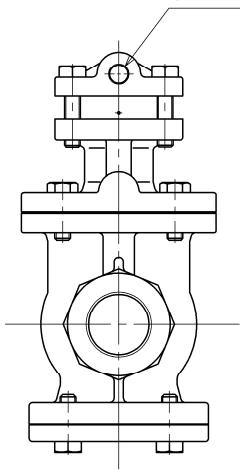
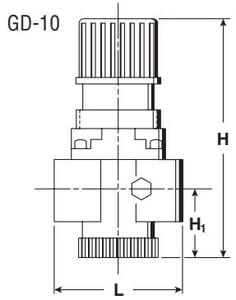
| Nominal Size | d | L (mm) | H1 (mm) | H (mm) | Weight (kg) |
|---|---|---|---|---|---|
| 15A | Rc 1/2 | 150 | 64 | 220 | 7.0 |
| 20A | Rc 3/4 | 155 | 64 | 220 | 7.0 |
| 25A | Rc 1 | 160 | 67 | 235 | 8.5 |
| 32A | Rc 1-1/4 | 190 | 82 | 258 | 12.0 |
| 40A | Rc 1-1/2 | 190 | 82 | 258 | 12.5 |
| 50A | Rc 2 | 220 | 93 | 282 | 18.0 |
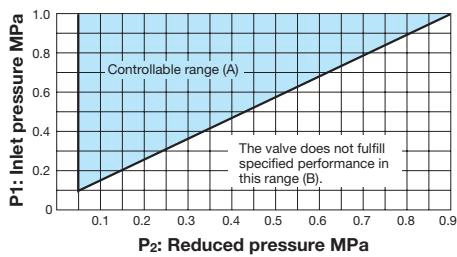
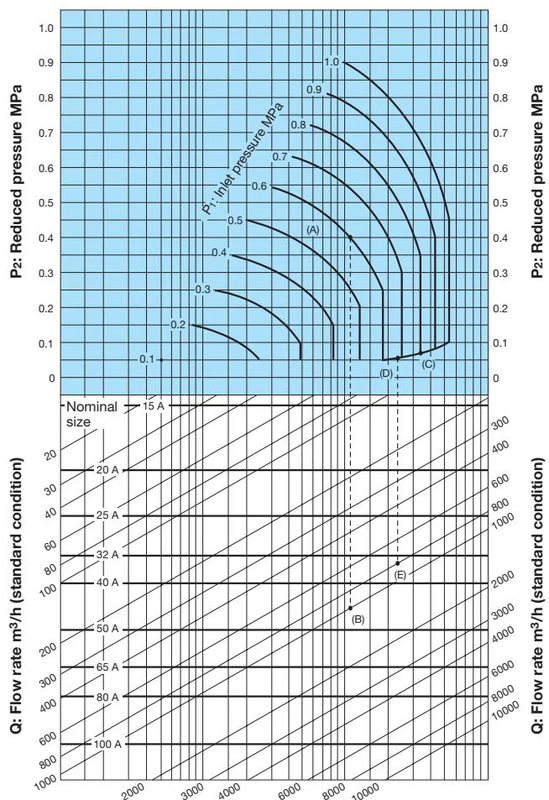
Find the intersection point of the inlet and reduced pressures. The valve is suitable within range (A). When within range (B), maximum performance cannot be obtained.
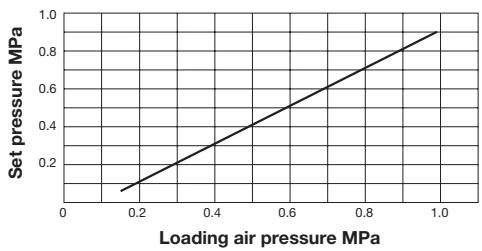
The set pressure is basically related to the loading air pressure as shown above. As slight deviations may occur depending on conditions such as air line length, adjust the loading air pressure accordingly.
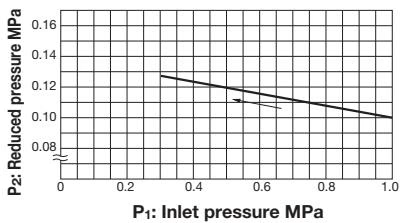
This chart shows variation in reduced pressure when the inlet pressure of 1.0 MPa is changed between 0.3 MPa and 1.0 MPa while the reduced pressure is set at 0.1 MPa.
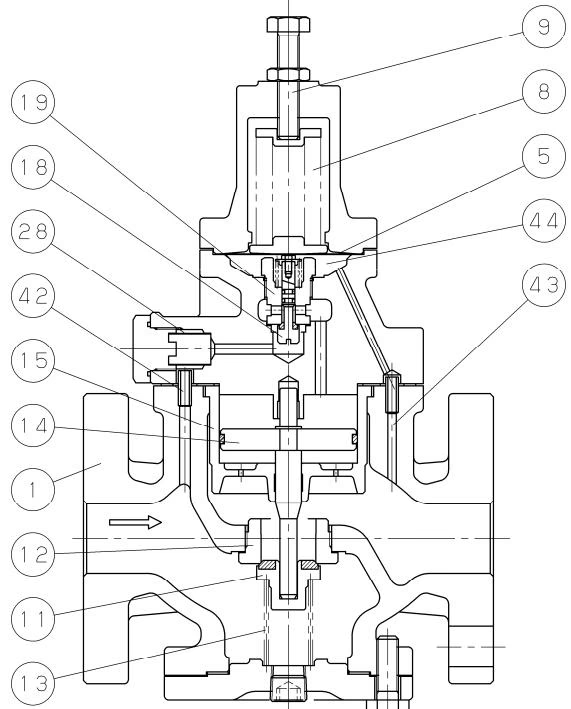
| No. | Parts Name | No. | Parts Name |
|---|---|---|---|
| 1 | Body | 15 | Cylinder |
| 5 | Diaphragm | 18 | Pilot valve |
| 11 | Main valve | 19 | Pilot valve seat |
| 12 | Main valve seat | 28 | Strainer |
| 14 | Piston | 44 | Diaphragm chamber |
(Note: Adjusting spring/screw shown in the diagram apply to the spring-loaded types. GP-1210TS uses air-loaded pressure).
The pressure reducing valve reduces pressure by throttling the valve via the main valve and main valve seat, activated by the pilot valve and piston which sense the air-loaded pressure and the reduced pressure.
Installation Warnings
::: caution Installation Cautions
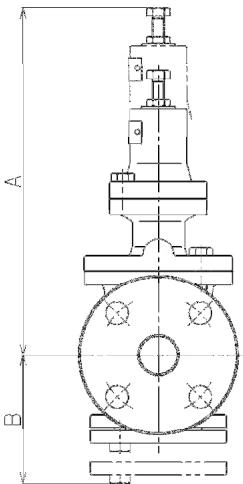
Clearances for Air-loaded Type (Dimension B):
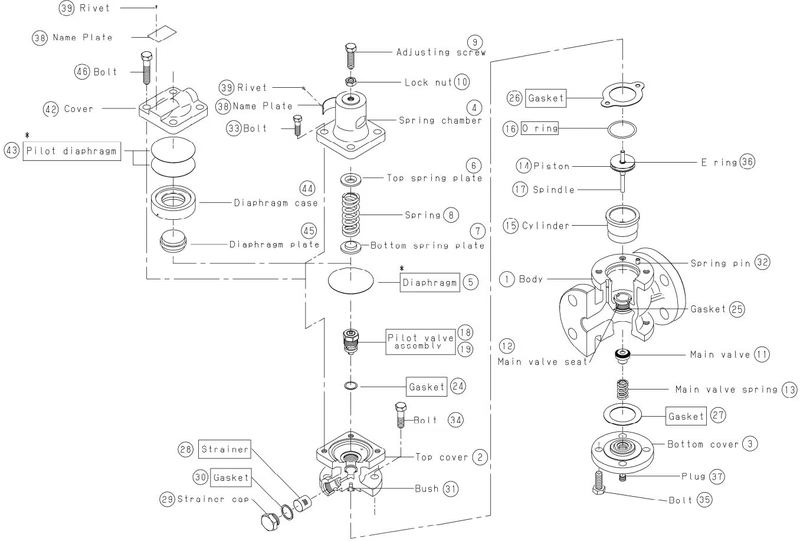
Consumable Replacement Periods:
Maintenance Safety
Completely discharge internal pressure from the valves, lines, and equipment, and cool the valve down to a level where you can touch it with bare hands before disassembly and inspection. Confirm the loading air pressure is set to zero.
Yoshitake Control Valves / Pressure Reducing Valves
GP, GD, and CP series for stable pressure reduction and control in steam, water, and air systems.
Explore similar products in our catalog